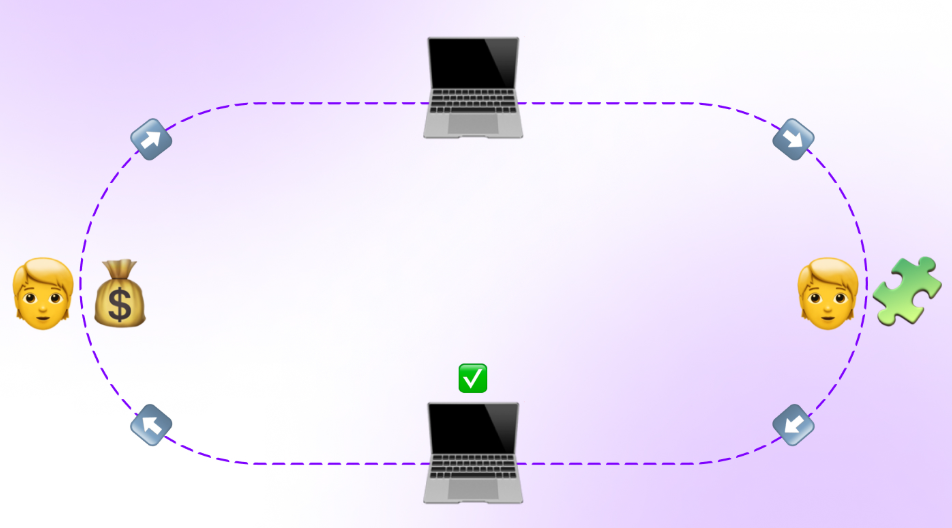
How Consensus Mechanisms Work
Consensus mechanisms are fundamental to the operation of blockchain networks. They allow distributed nodes to agree on transaction validity, ensuring security and data integrity. Various protocols, such as Proof of Work and Proof of Stake, each employ distinct methodologies for achieving consensus. Understanding these mechanisms is crucial for evaluating their effectiveness. The implications of these mechanisms on future decentralized networks present intriguing possibilities that warrant further exploration.
Why Consensus Mechanisms Matter in Blockchain
Although blockchain technology has gained prominence for its potential to transform various industries, the significance of consensus mechanisms cannot be overstated.
These mechanisms play a crucial role in ensuring security implications, as they prevent malicious attacks and maintain data integrity.
Additionally, they directly impact network scalability, enabling the blockchain to accommodate growth without sacrificing performance or security, thus fostering a decentralized, autonomous environment.
Understanding Proof of Work and Proof of Stake
While consensus mechanisms are essential for maintaining the integrity and security of a blockchain, two of the most prominent methods for achieving this are Proof of Work (PoW) and Proof of Stake (PoS).
PoW relies on mining efficiency to validate transactions, consuming significant energy, while PoS incentivizes users with staking rewards, promoting network participation without the high energy costs associated with mining.
See also: poetrysecrets
Comparing Benefits and Drawbacks of Consensus Mechanisms
Consensus mechanisms frequently present a complex interplay of advantages and disadvantages that can significantly impact a blockchain’s functionality and efficiency.
A benefits analysis reveals heightened security and decentralization, while drawbacks exploration highlights scalability issues and energy consumption concerns.
Understanding these dynamics is crucial for stakeholders aiming to harness the full potential of blockchain technology while ensuring sustainable and effective operational frameworks.
What Are the Future of Consensus Mechanisms in Decentralized Networks?
As decentralized networks continue to evolve, the future of consensus mechanisms is poised to adapt to emerging challenges and technological advancements.
Future innovations are likely to prioritize scalability solutions, enabling networks to handle increased transaction volumes efficiently.
Conclusion
As blockchain technology continues to evolve, the fate of consensus mechanisms hangs in a delicate balance. Will the energy-intensive Proof of Work succumb to environmental pressures, giving way to the more sustainable Proof of Stake? Alternatively, could innovative hybrid models emerge, redefining the landscape entirely? The future remains uncertain, shrouded in the potential for both unprecedented growth and unforeseen challenges. Each decision made today could reverberate through the decentralized networks of tomorrow, shaping a new era of digital trust.